News
From The 40-Year Archives: A Project That Raised The Bar
More than a decade ago, Synergi delivered one of the most technically demanding feature stairs in its 40-year history: a suspended three-story floating stair at the JBG Smith Headquarters in Bethesda, Maryland.
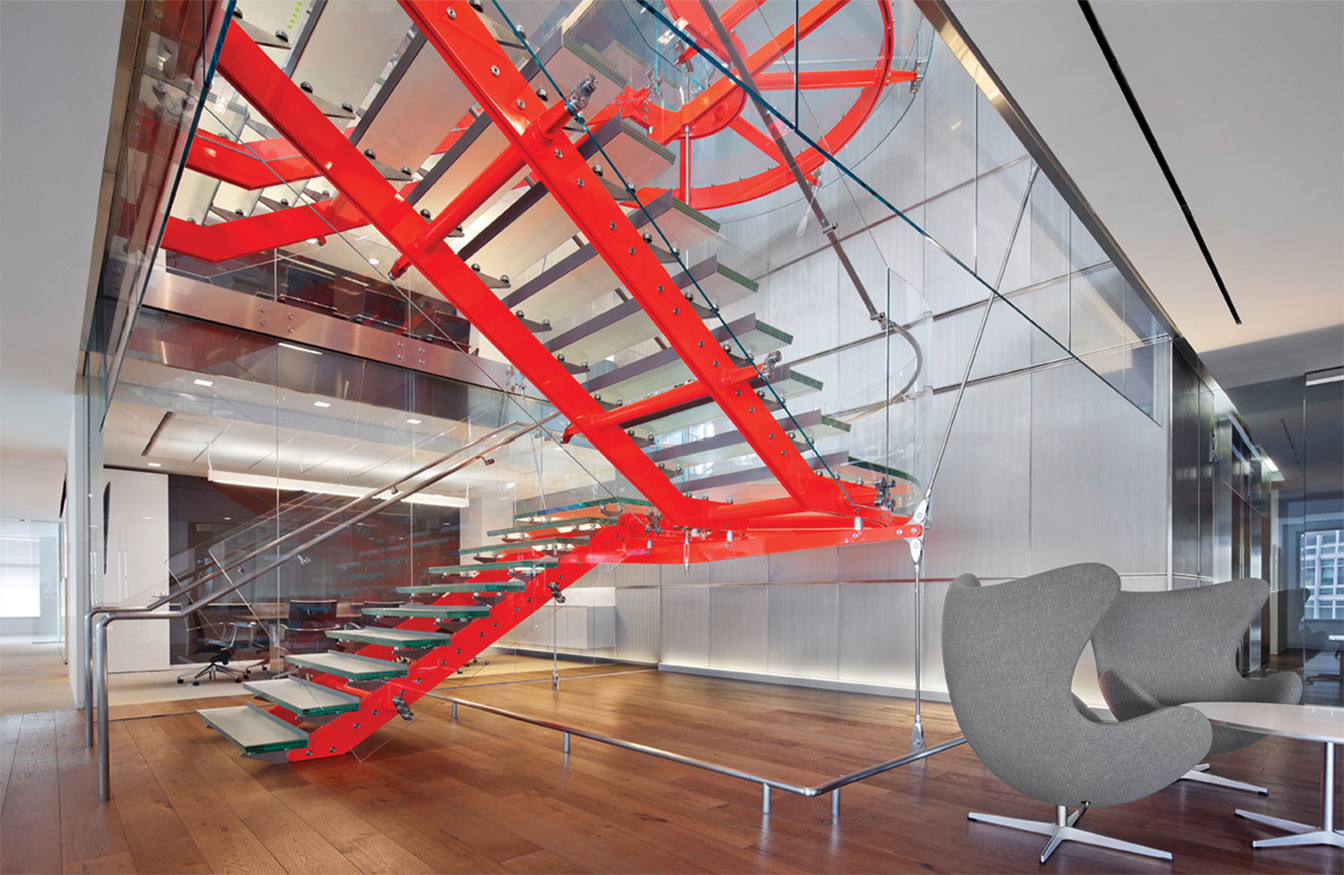
Looking back through our archives, the JBG Smith Headquarters stair captures a moment when feature stairs were becoming increasingly ambitious. Architects were pushing for lighter structures, cleaner details, and greater transparency, while project teams were challenged to turn those ideas into reality.
In 2013, Synergi was working alongside Davis Construction and internationally renowned architect Dennis Austin of Rogers Stirk Harbour + Partners on the renovation of JBG Smith’s headquarters. At the center of the project was a suspended three-story feature stair that would serve as both a critical circulation path and the visual focal point of the space.
The design was striking in its simplicity.
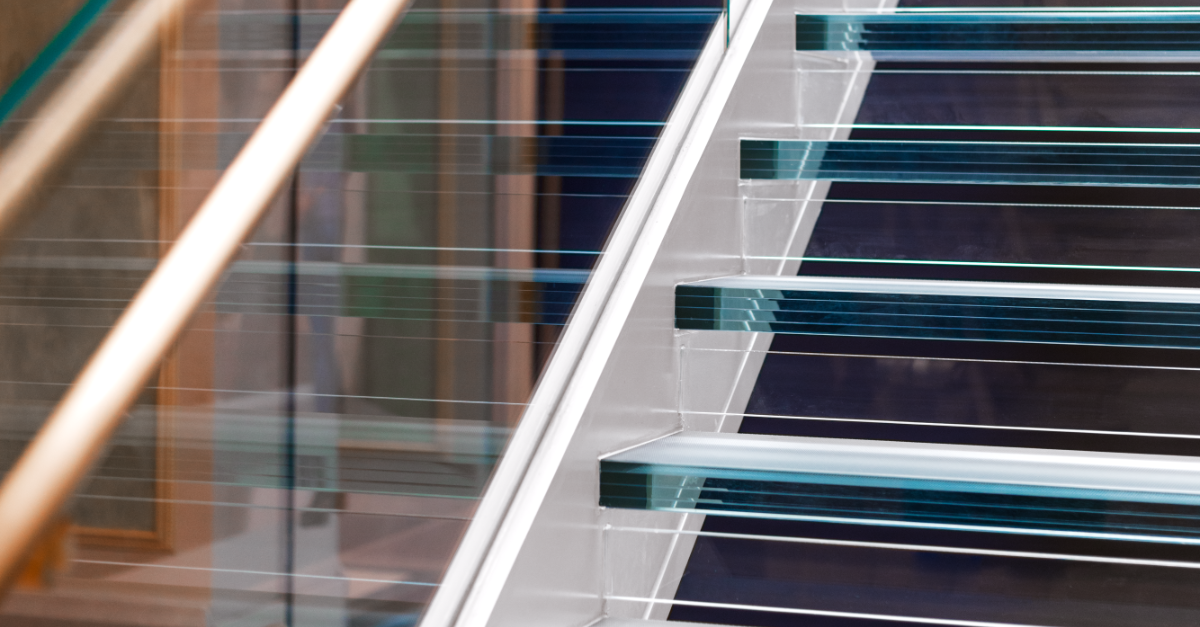
Sweeping steel stringers, laminated glass treads, frameless glass guardrails, and almost no visible indication of how the structure actually worked. The goal was a stair that felt light and open, as though it floated through the atrium while connecting three levels of the workplace.
As is often the case with highly engineered feature stairs, creating that sense of simplicity required significant complexity behind the scenes.
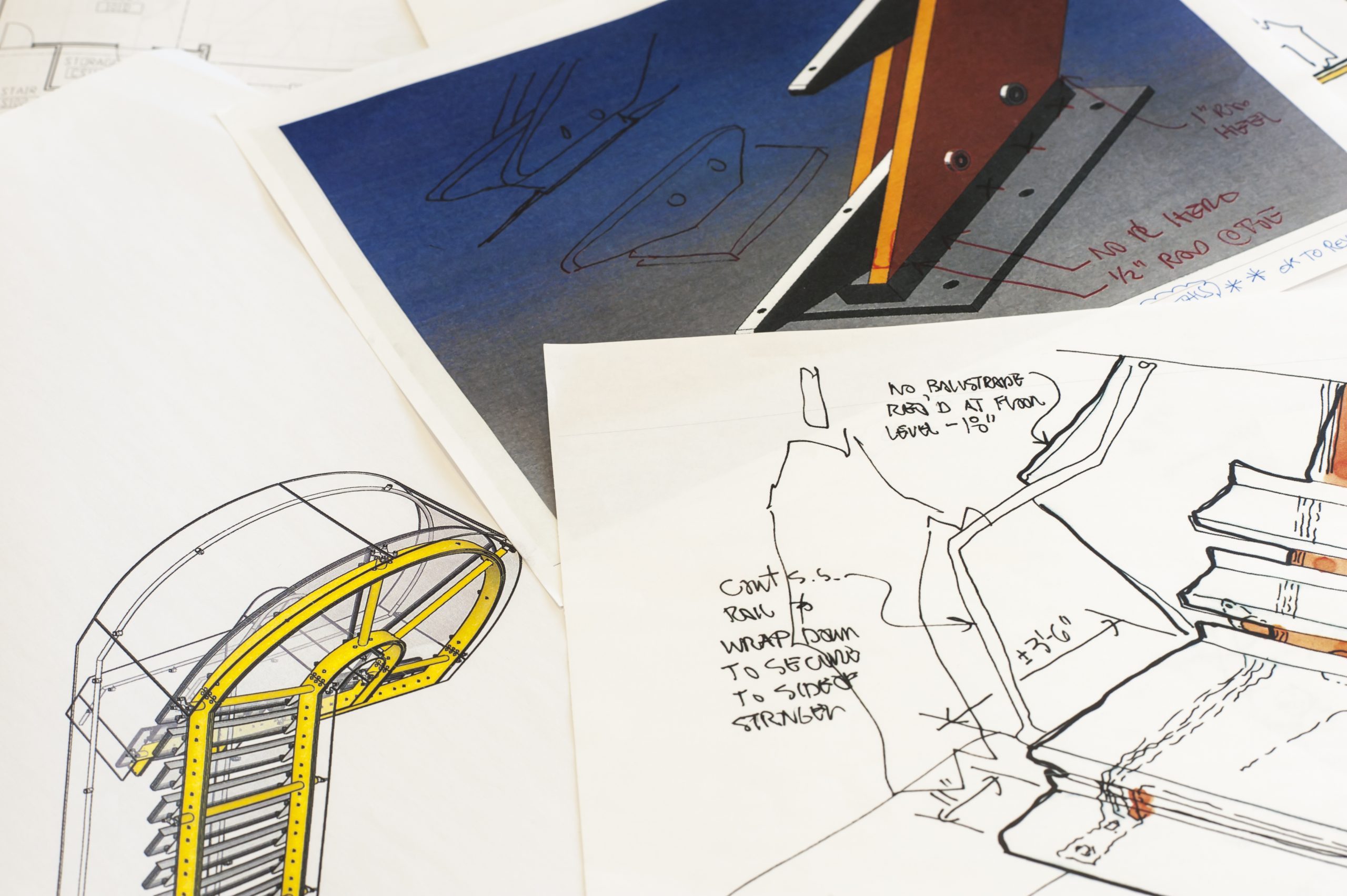
Early coordination with Synergi’s team revealed that the visual goals of the project and the structural realities of the system would need to be carefully balanced. Working closely with the architect and contractor, Synergi helped refine the structural approach while preserving the transparency and visual lightness that were central to the design intent.
Then there was the color.
Today, the stair is remembered as much for its vibrant fluorescent orange finish as for its floating appearance. According to Dennis Austin, the inspiration came from an unexpected source: a Stabilo highlighter pen. What began as a simple design reference became one of the project’s defining features.
 Achieving the finish quality proved to be a project in itself.
The steel components were transported to a specialty automotive paint facility in Canada, where they underwent a finishing process more commonly associated with high-end automobiles than commercial construction. Multiple layers of primer, paint, and clear coat were applied, followed by repeated wet sanding and polishing to create the deep, reflective finish seen today.

Stair structure being painted in an automotive paint facility.
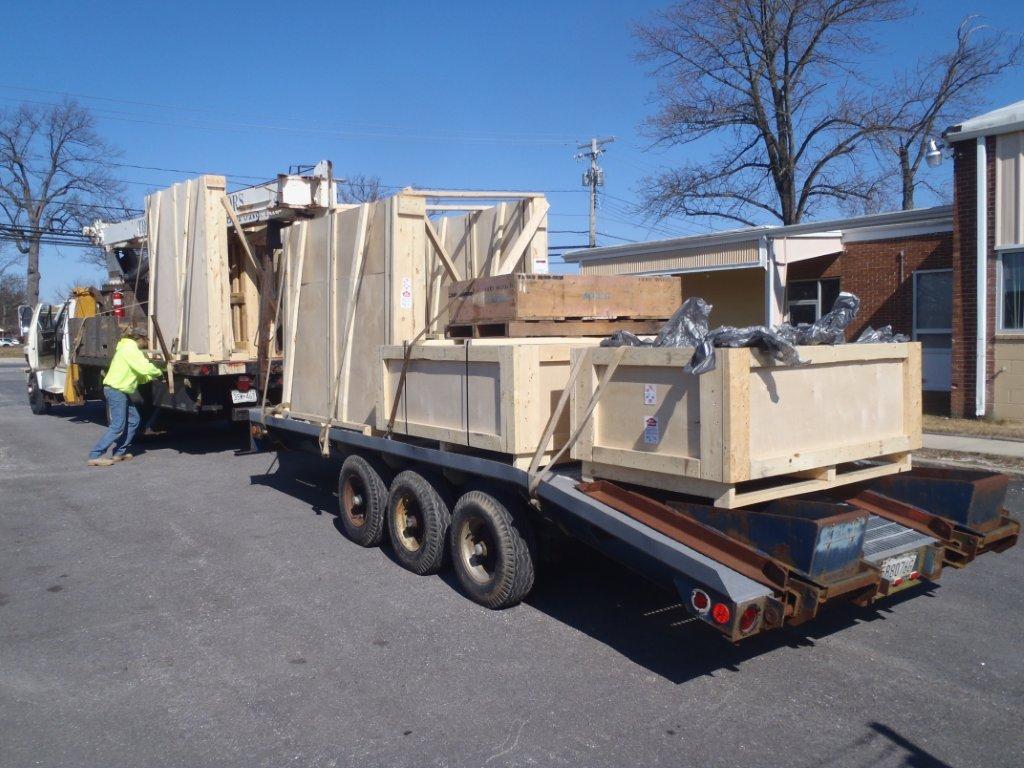
Each stair piece had specialized crating and protection procedures to preserve the mirror-polished surfaces and delicate glass interfaces during shipment and staging.
While the finish work was taking place, planning was already underway for another challenge: getting the stair into the building.
Unlike many large installations, the prefabricated stair sections were rolled into an occupied office environment.
Business operations needed to continue uninterrupted, which meant every step of the installation had to be carefully sequenced around the people working in the building each day.
Over the course of more than 2,000 nighttime labor hours, prefabricated stair sections were delivered, rigged through a sixth-floor window, and maneuvered through finished office interiors before being assembled in place. The system itself consisted of more than 800 individually machined components and over 1,000 mechanical fasteners, all engineered to fit together without on-site welding or finish modification.
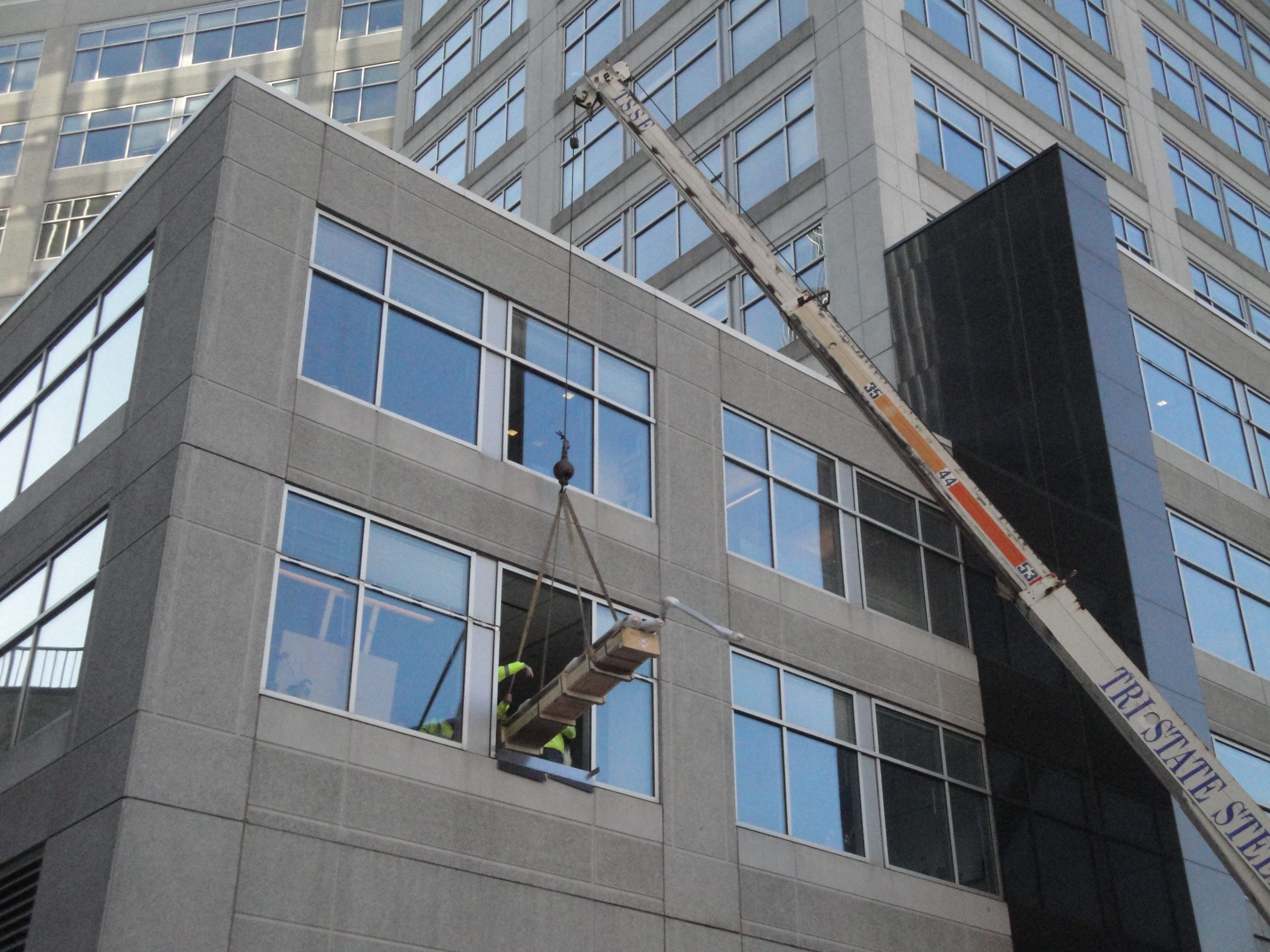
Pre-fabricated stair sections being rigged through a sixth-floor window.
When completed, the result appeared effortless.
Visitors see a floating stair of glass and steel connecting three floors. What they don’t see are the months of coordination, engineering, fabrication, finishing, logistics, and installation planning required to make that appearance possible.
More than a decade later, the project remains one of the standouts in our archives—not because it was the largest stair we have built, but because it reflects a moment when architectural ambition, engineering precision, and craftsmanship came together to create something memorable.

As Dennis Austin later reflected:
“I designed that stair from London and it was lovingly executed by the Synergi team in the States. Meticulous shop drawings, paint samples, prototypes for certain details, and seamless communication at all times. The Synergi team did a knockout job.”
Looking back today, the JBG Smith Headquarters stair serves as a reminder that some of the most memorable projects are not defined by size alone, but by the collaboration and problem-solving required to bring an ambitious idea into the built environment.
Read The Full Case Study Here
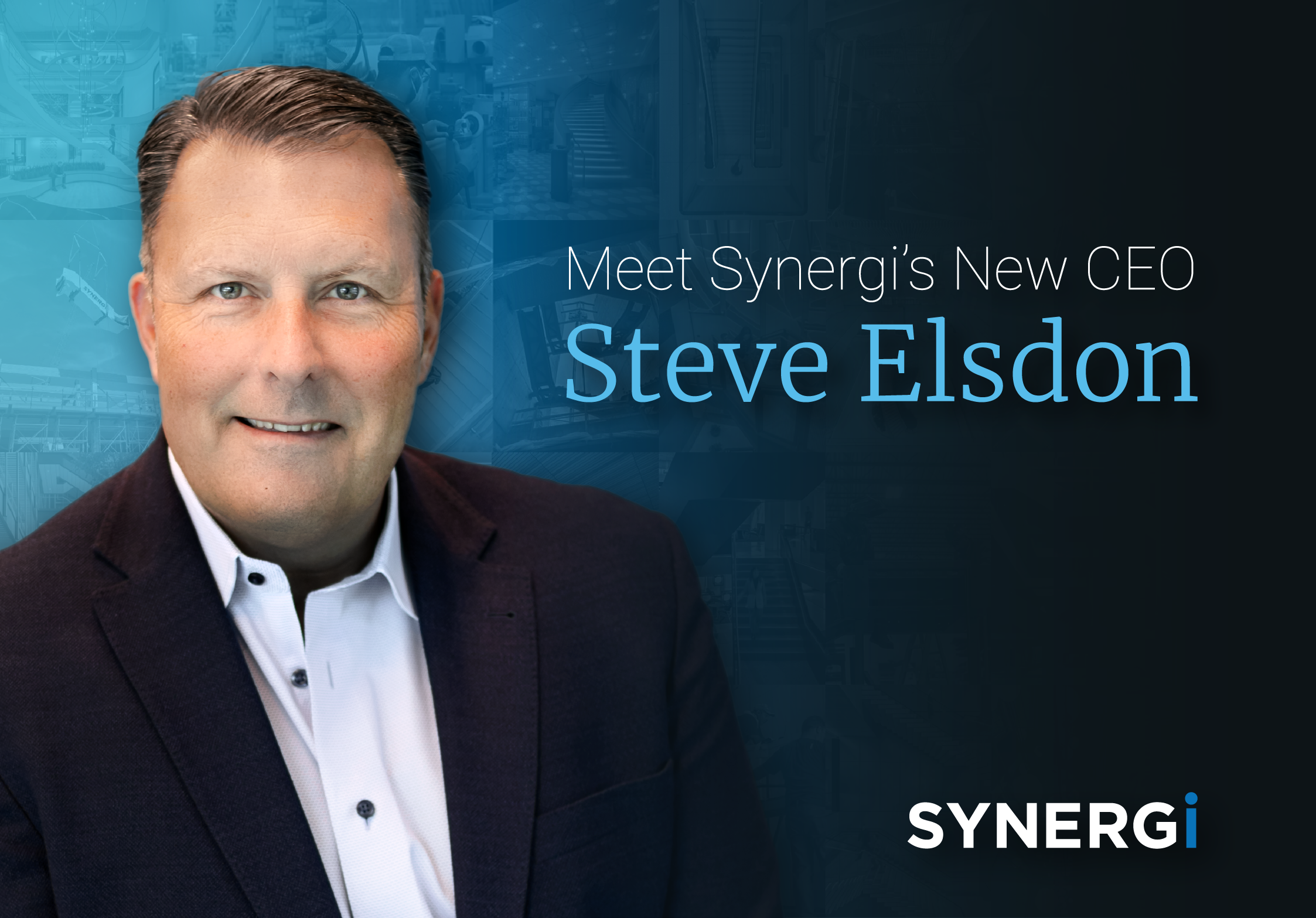
Synergi Appoints Steven Elsdon as Chief Executive Officer, Advancing Next Phase of Global Growth