Architectural
UNDERSTANDING RISERS AND TREADS: THE DETAILS THAT SHAPE STAIR PERCEPTION
Risers and treads can influence how users perceive each step, judge depth, and move confidently up and down a stair.
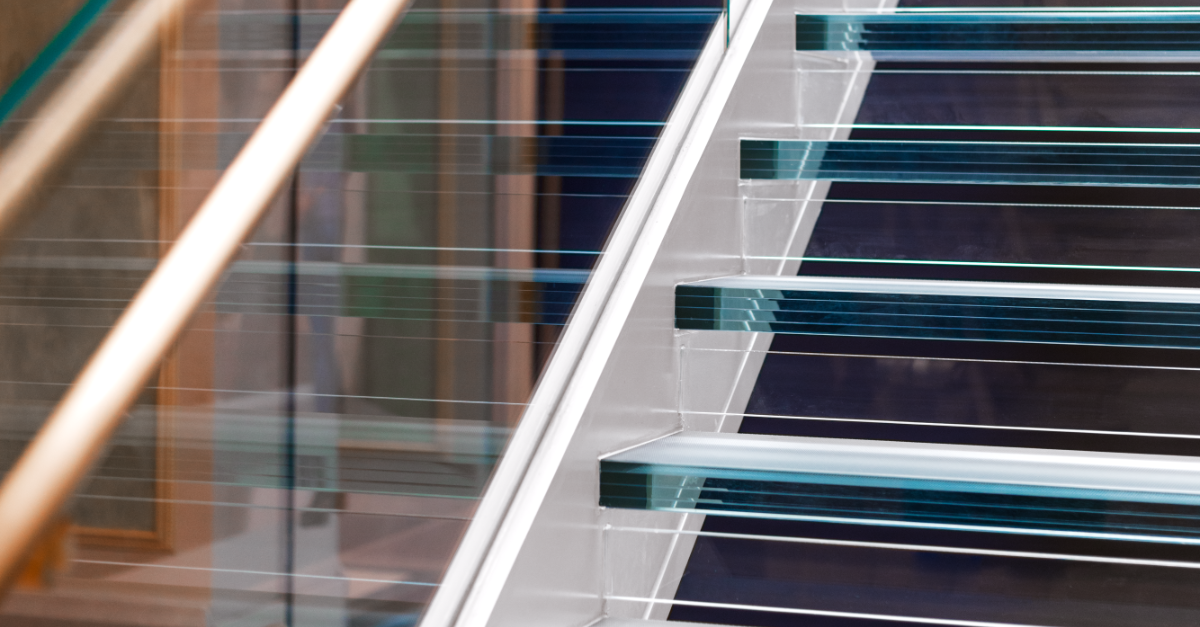
When people think about stair design, they often notice the handrails, finishes, or overall form. Yet some of the most important decisions happen at the level of the risers and treads. These seemingly simple components influence how users perceive each step, judge depth, and move confidently up and down a staircase.
The riser is the vertical surface between treads, while the tread is the horizontal walking surface itself. Together, they create the rhythm of a stair and shape how users experience it. Their design can affect everything from visual clarity and accessibility to safety and comfort.
Open vs. Closed Risers
Open-riser or “floating” stair risers have become a defining feature of contemporary architecture. Their transparency allows light to pass through the stair and can make a space feel larger and more connected. However, what creates visual openness for one user may create uncertainty for another. For individuals who rely on tactile feedback, such as cane users, older adults, or people with low vision, a solid riser provides important information about where one step ends and the next begins. Without a riser, a cane may extend beyond the back edge of the tread, making it more difficult to judge the position of the step. Open risers can also create visual distractions, particularly when viewed against busy backgrounds, making tread depth harder for some users to interpret.
Closed risers offer a more defined stair profile and can make the staircase easier to read at a glance. By filling the space between treads, they provide a clear visual separation between steps and reduce the possibility of feet, canes, objects, or even small children and pets passing beneath the stair. While open risers can create a dramatic architectural effect, designers should carefully consider how the stair will be experienced by a diverse range of users. It’s also important to note that many jurisdictions restrict or prohibit open-riser stairs altogether.
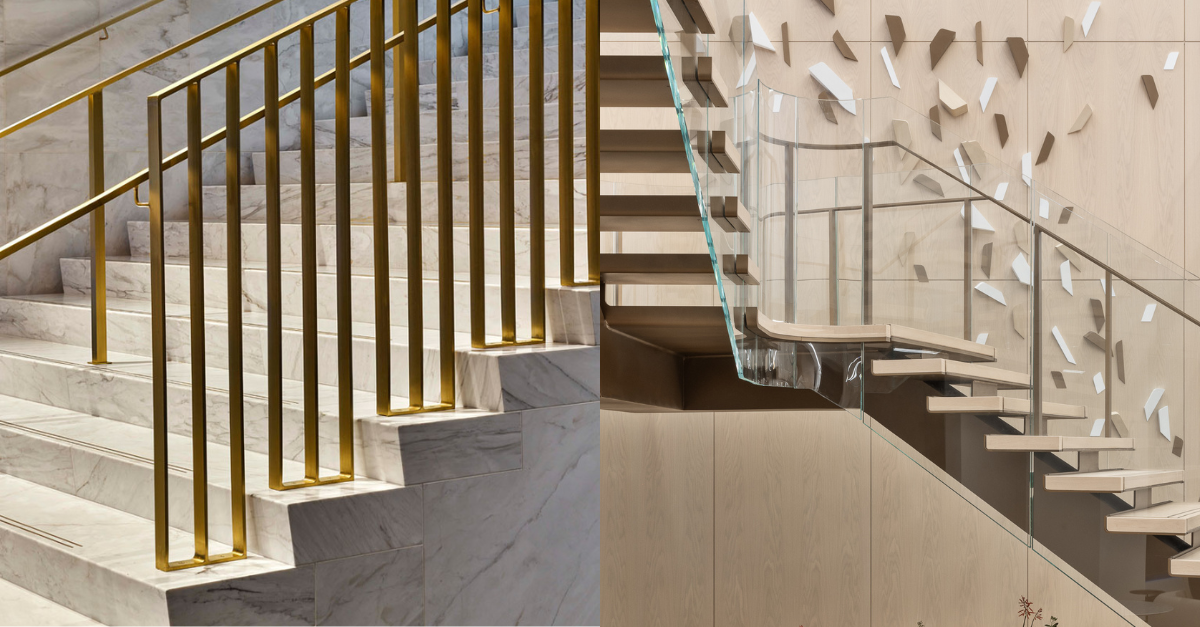
Synergi’s closed risers at Capital One Hall (right), Synergi’s open risers at Vista Equity HQ (left).
How Color and Contrast Help Users Navigate Stairs
People don’t navigate stairs using physical cues alone. Visual information plays an equally important role in helping users understand where a stair begins, where each step ends, and how the stair relates to the surrounding environment. One of the simplest ways to improve visual clarity is through contrast. Risers and treads that use different colors can make stair edges easier to identify during ascent, while treads that contrast with adjacent flooring or walls can help alert users to the presence of a change in elevation. These distinctions are particularly helpful for individuals with low vision but can improve wayfinding for everyone.
Texture and pattern can be equally influential. Changes in material, finish, or color often help communicate depth and movement, but overly complex patterns can sometimes have the opposite effect. Busy finishes, abstract graphics, or wood grain with dramatic tonal variation may create visual illusions that suggest edges where none exist. When users are required to interpret too much visual information at once, the staircase can become more difficult to read.
The most effective stair designs often rely on intentional simplicity. Clear contrasts and thoughtfully selected finishes help users focus on the geometry of the stair itself rather than competing visual distractions.
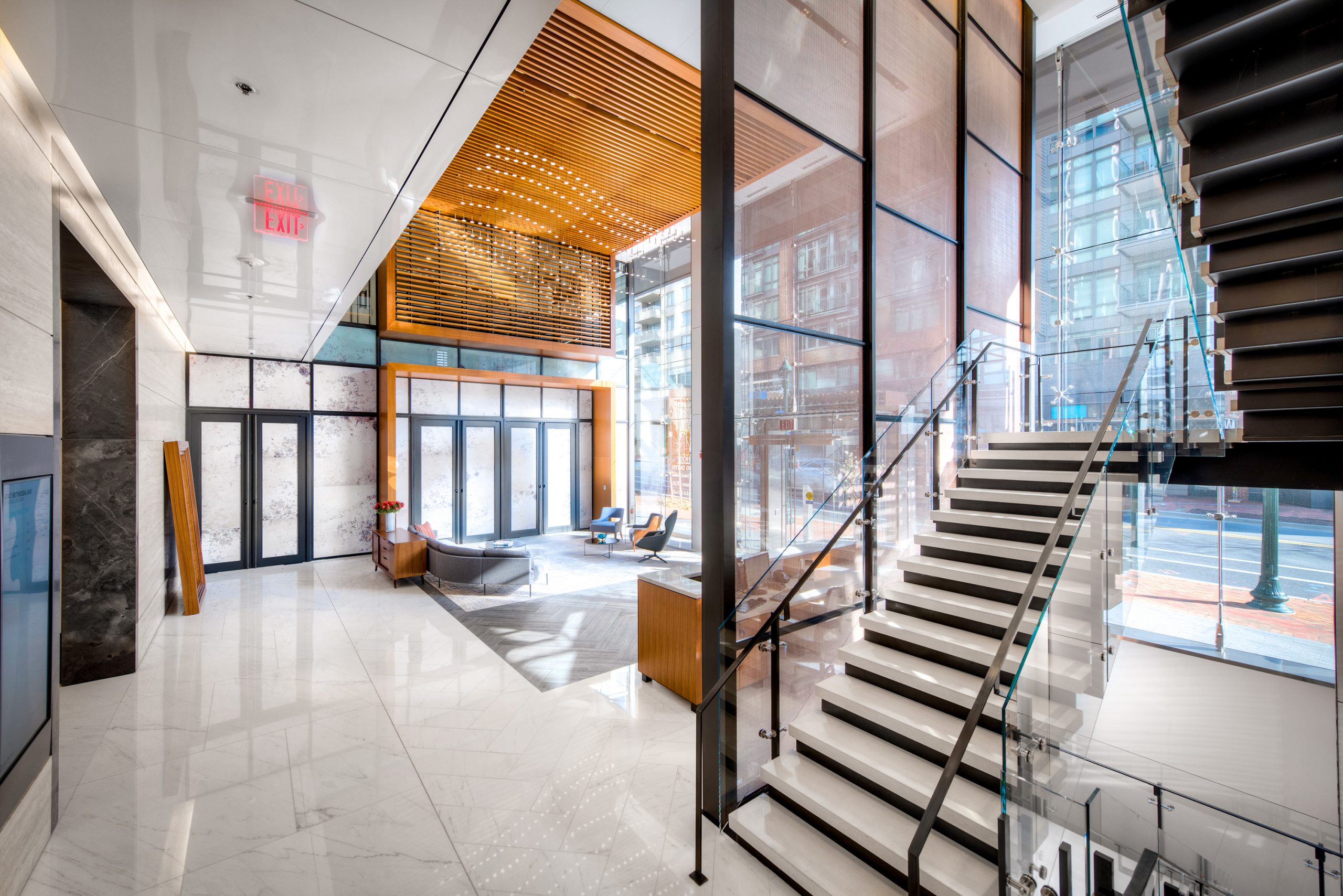
Synergi’s stairs in this lobby space provide high-contrasting black and white risers and treads, making each stair easy to detect.
The Importance of Stair Edges and Nosing
Every stair has an edge where the tread meets the riser. In many designs, the tread extends slightly beyond the face of the riser below, creating what is known as a nosing or lip. Though often subtle, this detail can have a significant impact on how a staircase feels and functions. Vertical risers typically create the clearest and most predictable transition between steps. When risers are angled, the tread projects outward and forms a more pronounced nosing. While this approach can be visually appealing, it may also make the stair profile less intuitive for users and increase the likelihood of catching a foot during ascent.
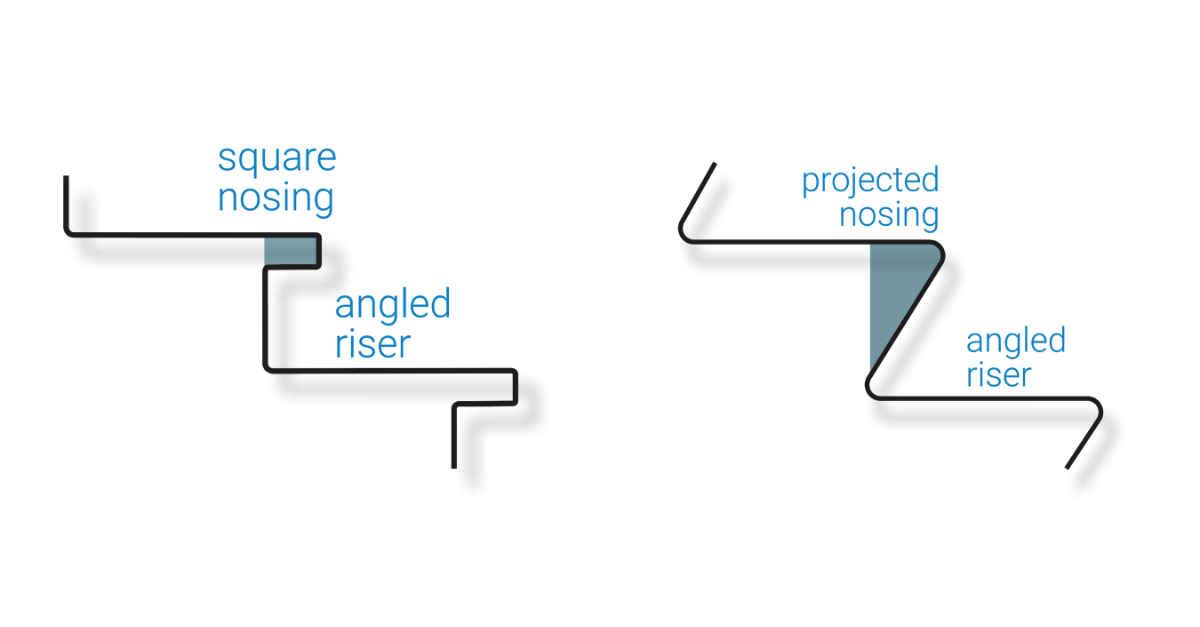
The shape of the nosing itself is equally important. Rounded, beveled, or flush nosings generally provide a smoother transition underfoot and reduce the chance of catching footwear. Sharp edges, while often associated with clean contemporary design, can feel more abrupt and may increase the risk of injury if someone stumbles. Square nosings present a similar tradeoff. Their crisp profile can reinforce a modern aesthetic, but they may be less forgiving for users who rely on visual or tactile cues while climbing stairs. Rounded or angled profiles often provide a smoother and more intuitive experience without sacrificing design intent.
Improving Existing Stair Conditions
Not every staircase starts with ideal conditions. In renovation projects or existing buildings, designers may need to work with stair geometries that include pronounced nosings or other features that present potential challenges. Where projected nosings already exist, a fillet can be added beneath the nosing to soften the transition and reduce tripping hazards. If modifying the nosing profile is not practical, slip-resistant strips can provide an alternative solution by improving traction and increasing visibility at the stair edge. Building codes and accessibility standards recognize that not all stairs will have perfectly vertical risers. The ADA Accessibility Guidelines permit risers to slope beneath the tread by up to 30 degrees from vertical, allowing a projected nosing to extend up to 1½ inches beyond the tread below. In these situations, the underside of the leading edge should be curved or beveled to create a safer and more predictable walking surface.
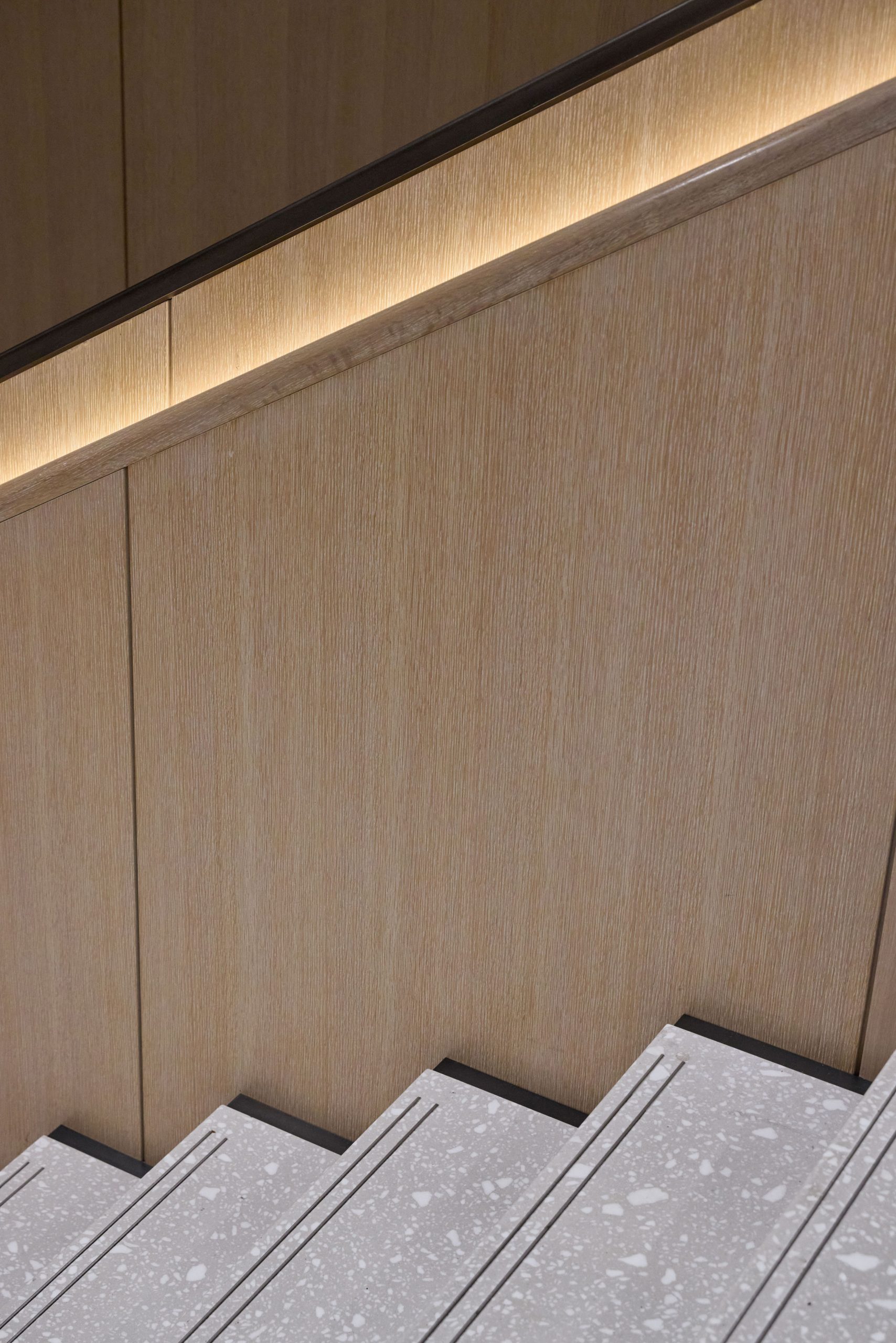
Synergi’s slip resistant treads at Morgan Stanley’s Boston office.
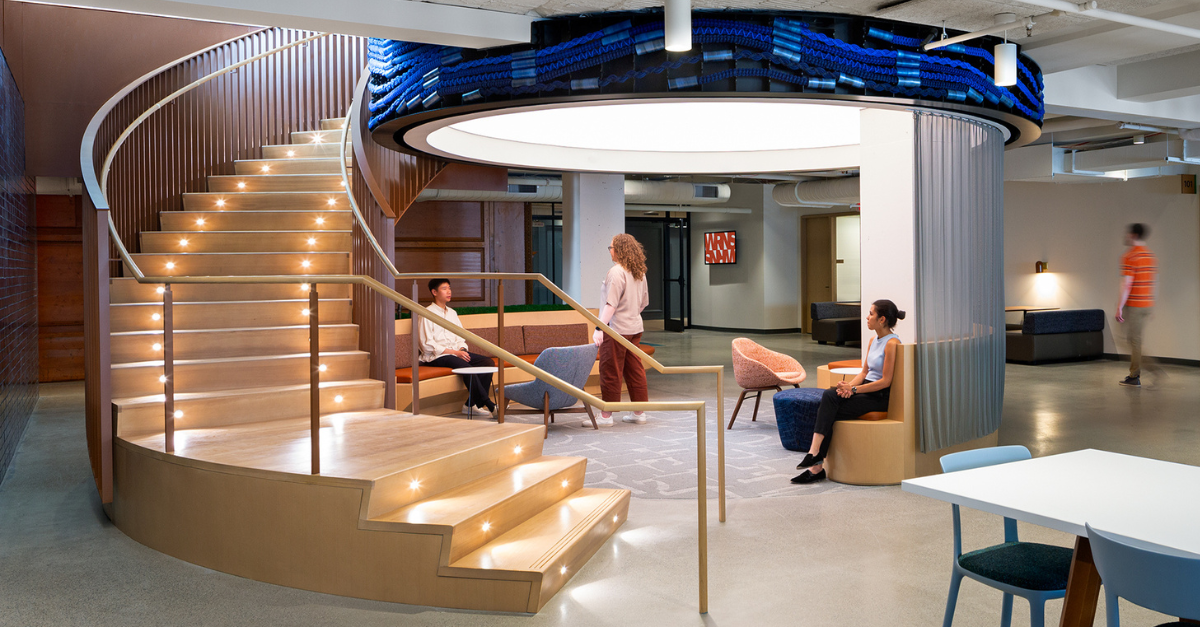
Synergi’s lighted stair risers at Amazon Hank.
Design Stairs That People Can Read
At their best, risers and treads do more than support movement between floors. They help users understand a staircase instinctively, providing the visual and physical cues needed to move confidently through a space. Whether considering open versus closed risers, selecting finishes and colors, or refining the shape of a nosing, every detail contributes to how a staircase is perceived and experienced. By prioritizing clarity, contrast, and thoughtful detailing, designers can create stairs that are not only visually compelling but also intuitive and comfortable for the people who use them every day.
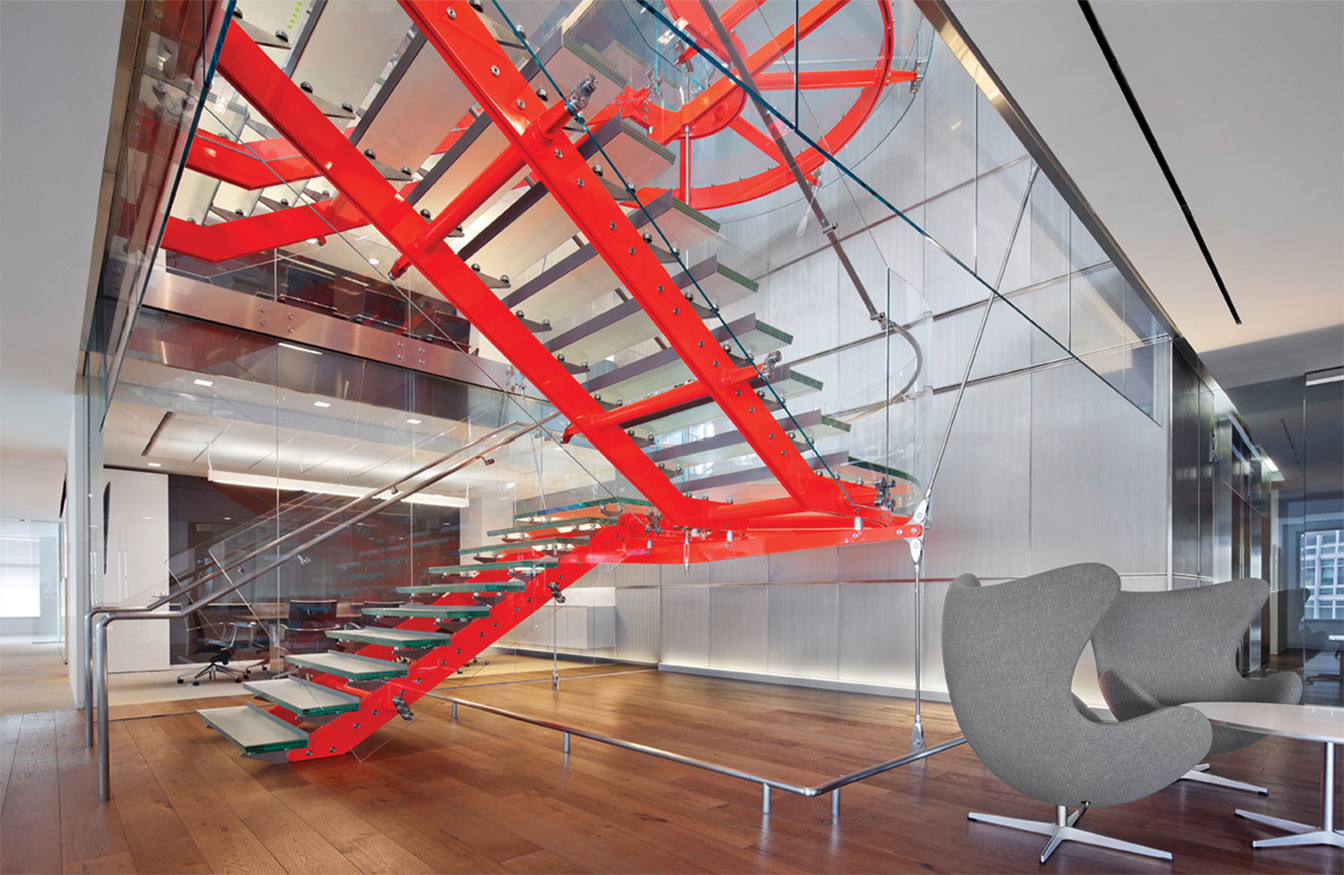
From The 40-Year Archives: A Project That Raised The Bar